A More Relaxed Way to Share a Film Night
A relaxed shared film night starts with a short shortlist, a low-pressure way to change course, and pauses that let everyone stay part of the evening.
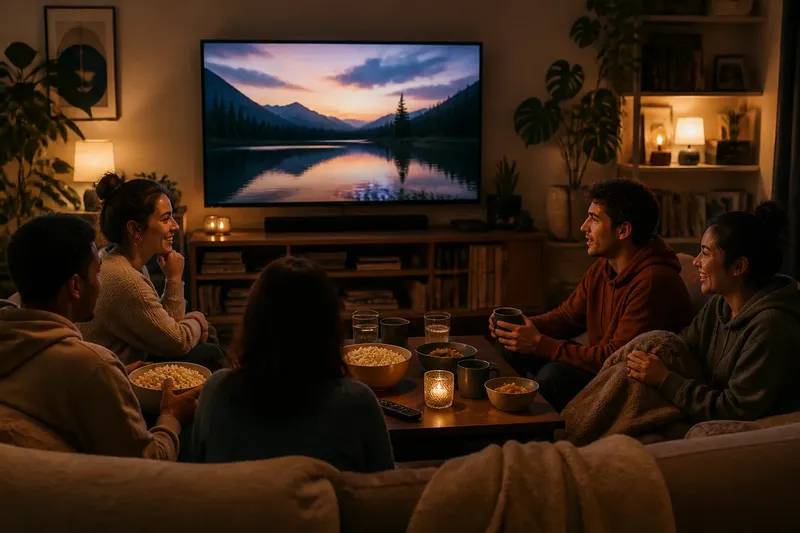
The most common mistake on a shared film night is waiting until everyone is settled to start choosing. A long scroll through streaming menus can drain the room’s patience before a film begins; a short shortlist made beforehand gives the group a clear starting point without turning the evening into a binding appointment.
A relaxed shared film night is not a tightly managed schedule. It is a simple agreement about how to choose, when to reconsider, and how to handle interruptions so that watching together still feels comfortable.
Why does choosing a film take over the evening?
Streaming menus make options easy to browse but hard to compare. One person may be searching by mood, another by genre, and someone else may be checking whether a title is available on the service the group can use. Without a boundary, each new suggestion can restart the discussion.
Agree on a short shortlist before the gathering, ideally through a group chat or a shared note. Keep it varied enough to offer a real choice: perhaps one comedy, one mystery, and one quieter drama. The aim is not to find a title everyone already loves; it is to make the final decision manageable.
Include enough information to distinguish the options, such as the title, the streaming service, and a brief description of the mood or subject. That saves the group from reopening several apps simply to remember why a film was nominated.
If a title is unavailable, hard to locate, or requires a subscription nobody has, remove it rather than letting the search become the evening’s main activity. Check availability close to the gathering, since streaming catalogs can change.
What if the shortlist still feels like a vote?
A shortlist can create pressure if everyone treats it as a contest with a winner and losers. Instead of asking each person to defend a favorite, ask whether anyone has a clear reason to rule out an option, such as an unwanted subject or a mood that does not fit the group.
Then choose from what remains. A simple rotation can also help: one person makes the final selection this time, and someone else chooses at the next gathering. The arrangement should make decisions easier, not create a new duty to justify every preference.
Say a group has three titles in its chat: a comedy, a tense mystery, and an animated adventure. One guest says they would rather avoid a suspenseful story that evening, so the group sets the mystery aside and chooses between the other two. That gives the preference a place in the decision without asking anyone to argue for a particular film.
How can the group leave room to change its mind?
Choosing a film is not a promise to watch it to the end. A title may feel different once it begins: the pace may be slower than expected, the tone may not suit the room, or someone may realize they are too tired for the subject. Treating a change of mind as acceptable makes the initial choice less stressful.
Before pressing play, agree on a low-pressure way to check in. For example, anyone can ask for a brief pause after the opening has had time to establish its tone. The group can continue, switch to another shortlisted title, or stop for the evening without putting one person on trial.
If the group does switch, avoid reopening the entire catalog. Return to the shortlist and choose another option, or call the viewing there. A limited next move keeps reconsideration from turning into another long search.
What can go wrong once the film starts?
Small interruptions often become awkward because people are unsure whether to speak up. Someone may need a drink, a delivery may arrive, or a question may come up about a plot detail. If everyone is trying to appear fully attentive, a routine pause can feel like a disruption rather than part of sharing a room.
Make pausing ordinary. Anyone should be able to ask for one when they need to step away or when a moment deserves a quick conversation. The group can decide whether to pause immediately or wait for a natural break, but no one should have to miss a stretch of the film to avoid seeming inconvenient.
When the pause ends, give the person who stepped away a moment to settle before resuming. If a conversation has started, let it finish or agree to return to it afterward; talking over important scenes can leave other viewers behind.
For a practical setup, place the remote where everyone can reach it and agree on who will handle playback if the controls are confusing. On a shared television, streaming stick, or casting setup, the person holding the remote should not become the sole decision-maker. Invite a clear request to pause or resume, and keep the controls visible rather than buried in a phone menu.
How should you handle different viewing rhythms?
People do not all watch in the same way. One viewer may want to talk through a funny scene, while another prefers to stay quiet until the credits. Neither preference needs to govern the whole evening, but a little coordination prevents irritation from building unnoticed.
Agree on a simple signal for conversation, such as pausing before discussing a confusing moment or saving side comments for a natural lull. If one person likes to read subtitles and another finds them distracting, check the player’s caption settings before starting; a quick adjustment is easier than interrupting the film repeatedly.
Consider the room as well as the screen. A phone notification, a bright lamp reflected in the television, or a second device playing sound can pull attention away from the shared viewing. Make a small change that suits the group, such as silencing alerts or moving a lamp, rather than insisting everyone watch in exactly the same manner.
What if people arrive late or need to leave early?
A shared film night can include different schedules, so decide how late arrivals will be handled before the opening begins. If the group wants to wait, choose a clear moment to start rather than repeatedly delaying for uncertain arrivals. If the film is already underway, pause briefly to bring someone up to speed or let them join without a full recap.
For someone who needs to leave early, the group can agree to finish the film without them or stop at a suitable point. Streaming players often remember a place in a title, but the exact behavior depends on the service and device. Avoid making the whole group restart or wait unless everyone genuinely prefers that.
If the evening is likely to be interrupted, choose a film the group can follow without treating every detail as essential. That does not mean selecting something nobody cares about; it means matching the choice to the kind of attention the room can offer.
Which small agreements prevent the usual snags?
- Set the shortlist before guests arrive. Keep a few distinct options and record where each one streams; remove titles the group cannot access.
- Choose a way to break a tie. Use a rotating chooser or a quick elimination round so the discussion does not circle back to the same preferences.
- Make switching acceptable. Decide that the group can reconsider after the opening without treating the first selection as a commitment.
- Normalize pausing. Say that anyone can request a pause for a practical need or a brief conversation.
- Check captions and sound before playback. Set subtitles, volume, and the right screen while the group is still getting comfortable.
- Set expectations for arrivals. Decide whether to wait briefly, start at an agreed time, or let latecomers join in progress.
- Keep a simple fallback. If no film suits the mood, choose a shorter program or end the search rather than browsing without a limit.
What questions help a film night stay relaxed?
How many films should go on a shared shortlist?
Choose a few options that differ in mood or style, rather than a long catalog of near-duplicates. A compact list is easier to discuss and leaves room for someone to suggest a fresh choice if none feels right.
Should everyone agree on the film before play begins?
Everyone should have a fair chance to object, but unanimous enthusiasm is not necessary. A clear way to raise a concern and a simple method for choosing can be more comfortable than asking each person to declare a favorite.
Is it rude to pause a film for conversation?
Not if the group has agreed that pauses are part of the evening. Pause for a practical need or a short exchange, and resume when everyone is ready rather than expecting someone to choose between the film and the people in the room.
What should you do if nobody wants the chosen film?
Ask whether the problem is the title, the mood, or simply the desire to watch anything at all. Try another option from the shortlist, choose a shorter program, or let the evening become conversation instead of extending the search indefinitely.
How can the evening end without another negotiation?
Do not assume that reaching the credits means everyone wants another selection. Ask whether the group would like to continue, talk for a while, or call it a night. That question keeps a pleasant ending from turning into a second round of menu browsing.
If the group wants to meet again, note which kinds of choices worked for the room rather than building a large permanent queue. The practical value of a relaxed shared film night is not a perfect pick; it is a format people can return to, with space for preferences, interruptions, and a change of mind.
Before the next gathering, keep the shortlist small and the pause button within reach. Those two modest choices make it easier to spend the evening with one another, not with the streaming menu.